
The Invisible Real Estate Defining Your Mobile Signal
Mobile coverage begins long before a carrier advertises a faster plan. Its foundation is government-managed radio spectrum, divided into licenses that determine which frequencies an operator can use, where those frequencies can be deployed, and how much capacity can be delivered from each site. Marketing can describe a network as nationwide or ultra-fast, but the physical experience at a particular address depends on spectrum holdings, tower placement, antenna configuration, backhaul, device support, and local demand.
The central trade-off is straightforward. Low-band spectrum travels farther, bends around obstacles more effectively, and penetrates buildings relatively well. Mid-band spectrum carries substantially more data, but its useful range is shorter and its signal is more readily weakened by walls, terrain, and distance. Auction outcomes therefore become infrastructure decisions. A carrier that acquires large mid-band holdings must generally invest in more sites, more antennas, and more carefully engineered capacity layers to turn that license into dependable service. For consumers and enterprise buyers, the important question is not simply which carrier claims the broadest coverage, but which frequencies are actually deployed where service is needed.
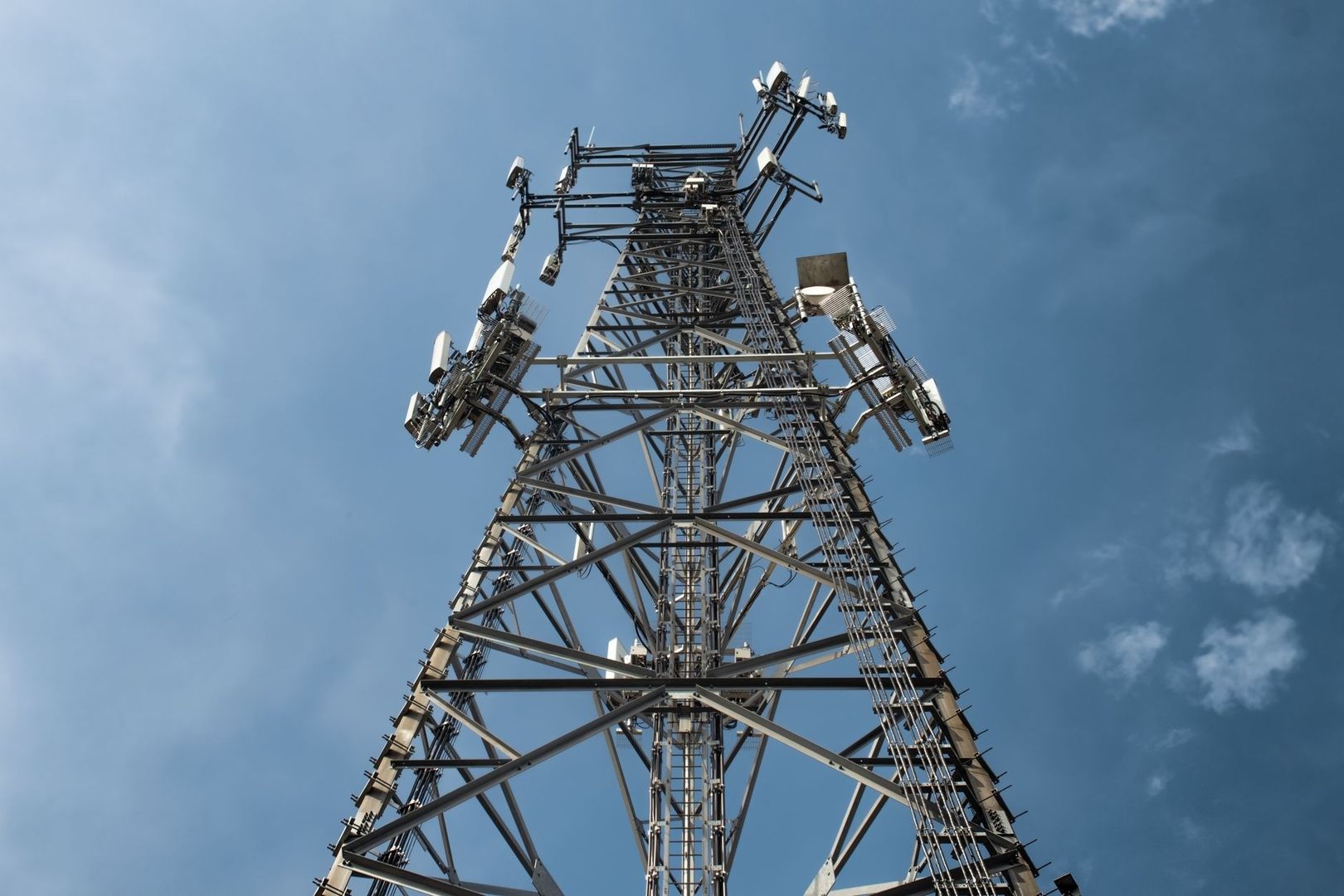
Physics Dictates Architecture in the Wireless Spectrum
Radio spectrum is the range of electromagnetic frequencies used to transmit information wirelessly. In practical mobile networking, low-band frequencies are generally below 1 GHz, mid-band frequencies occupy roughly 1 GHz to 6 GHz, and millimeter-wave systems use much higher frequencies. These categories are not merely labels. Frequency affects wavelength, propagation distance, penetration, antenna design, bandwidth availability, and the number of sites required to provide consistent service.
Lower frequencies have longer wavelengths and usually travel farther from a base station. They can cover broad rural areas and reach into buildings with fewer sites, although the amount of spectrum available in those bands may limit total throughput. Mid-band frequencies offer a more useful compromise for modern mobile networks. They provide wider channels and higher capacity than many low-band deployments, while still covering practical urban and suburban areas. Millimeter-wave frequencies can support exceptionally high capacity over short distances, but they are sensitive to walls, foliage, rain, street geometry, and even the position of a user relative to the antenna. Research into reflective surfaces and specialized propagation techniques illustrates how much engineering is needed to make high-frequency coverage reliable indoors and around obstacles.
These frequencies are not an unregulated commons. In the United States, federal and non-federal users share a structured allocation system that assigns portions of the spectrum to services such as mobile broadband, satellite communications, aviation, public safety, broadcasting, and government operations. The United States Frequency Allocation Chart, updated in September 2025 with data current as of March 2025, shows how densely this resource is divided. Auctions generally grant commercial operators defined rights within that framework, but those rights remain subject to technical rules, power limits, interference protections, and coordination obligations.
- Low-band spectrum: broad reach, strong building penetration, and efficient basic coverage, but often limited capacity per channel.
- Mid-band spectrum: a balance of range and throughput, making it the main capacity layer for contemporary 5G networks.
- Millimeter-wave spectrum: very high potential capacity, but short range and substantial sensitivity to physical obstructions.
The underlying relationship is not absolute, but it is consistent enough to shape network design: as frequency rises, operators can often access wider channels and higher data rates, yet the service area covered by each transmission site generally becomes smaller. Advanced antennas, beamforming, carrier aggregation, and dense site grids can improve results, but they do not repeal propagation physics.
Low-Band Versus Mid-Band Realities on Everyday Devices
Sub-1 GHz spectrum is particularly valuable for geographic coverage. A low-band signal can travel across open land and penetrate exterior walls more effectively than a higher-frequency signal. That makes it useful for highways, small towns, farms, and indoor baseline service. A single low-band site may cover a large area, reducing the number of towers needed to provide a basic connection. For an emergency call, messaging, or light web activity, that reach can matter more than peak speed.
The limitation appears when many devices compete for the same relatively narrow capacity layer. A low-band cell may cover a stadium district, transport hub, or suburban town, but coverage does not mean unlimited usable capacity. During a concert or a crowded commute, the same broad cell may have to serve thousands of active devices. Signal bars can remain high while data rates fall because the bottleneck is shared radio capacity, not reach.
Mid-band frequencies, particularly the spectrum used for extensive 5G capacity deployments, address that problem with wider channels and more aggressive spatial reuse. A real-world evaluation of 5G across Chicago, Minneapolis, and connecting highways found that wider individual channels and channel aggregation were the primary drivers of observed throughput improvements over 4G. The study also found that stronger signal conditions, denser deployments, and beamforming contributed to performance, while theoretical features such as four full MIMO layers per user were not consistently realized. In other words, a phone may support advanced specifications, but actual results depend heavily on the network around it.
| Characteristic | Low-band spectrum | Mid-band spectrum |
|---|---|---|
| Typical frequency range | Below 1 GHz | Approximately 1 GHz to 6 GHz |
| Cell radius | Generally larger, especially in open terrain | Generally smaller, requiring more sites for broad coverage |
| Building penetration | Usually stronger | Moderate, varying with frequency and construction |
| Capacity per channel | More limited when bandwidth is narrow | Higher when wider channels are available |
| Best practical role | Coverage foundation and rural reach | Urban, suburban, and enterprise capacity |
The practical result is a layered network. A phone may use low band to remain connected at the edge of a cell, mid band for faster data near a site, and other bands for additional capacity when conditions allow. The transition between layers is not always visible to the user, and performance can change dramatically between an outdoor street location, an office interior, a basement, and a crowded venue. A carrier with impressive mid-band holdings may deliver excellent speeds in one neighborhood and mediocre indoor performance in another if site density or building penetration is insufficient.
How Government Spectrum Auctions Determine Cell Tower Locations
Spectrum auctions transform a physical resource into a financial and engineering commitment. In major FCC proceedings, operators may spend billions of dollars for licenses covering particular geographic areas. The purchase does not automatically create coverage. It gives the carrier permission to use designated frequencies under specified rules. The carrier must then decide where those frequencies can produce sufficient return, how many sites are needed, and whether existing towers can support the required antennas and radios.
Low-band licenses can support broad-area deployment from relatively widely spaced macro sites. Mid-band licenses require a more demanding density model, particularly where the operator promises high capacity. Existing macro towers may provide the starting layer, but urban corridors, office districts, campuses, and high-traffic suburbs often need additional sites or small cells. Fiber or other high-capacity backhaul must also connect those radios to the core network. The cost therefore includes not only spectrum, but construction, leasing, power, transport, maintenance, permitting, and ongoing optimization.
- License acquisition: the operator obtains rights to specific frequencies and geographic areas through an auction or other regulatory process.
- Propagation planning: engineers model terrain, buildings, clutter, expected traffic, antenna height, and permitted power levels.
- Site expansion: the operator upgrades existing locations or adds macro sites, small cells, antennas, and backhaul where the model shows a gap.
- Optimization: radio parameters, beam patterns, handoffs, and capacity allocations are adjusted using drive tests, network data, and customer demand.
The history of spectrum repacking demonstrates that allocation changes can affect organizations far beyond mobile carriers. The 2016 to 2017 broadcast incentive auction involved a reverse auction for broadcasters and a forward auction for wireless licenses, followed by a repack of television channels. Public broadcasters faced construction deadlines, reimbursement issues, channel-sharing decisions, and potential uncovered costs. For mobile operators, similar regulatory transitions can create access to valuable frequencies, but the benefits arrive only after equipment changes, coordination, and deployment work.
Regional licensing can also shape the urban-rural divide. A carrier may hold valuable spectrum nationally but prioritize investment in markets with the highest traffic and commercial return. Rural areas may receive broad low-band coverage while waiting longer for dense mid-band capacity. Conversely, a regional operator with strong local holdings may outperform a national brand in a particular territory. Coverage maps can obscure this distinction because they often show whether a signal reaches an area, not how much capacity is available at busy times.
Regulatory Mitigations and Physical Deployment Bottlenecks
Mid-band deployment can encounter constraints that have little to do with consumer demand. The U.S. rollout of C-Band 5G illustrated the issue clearly because portions of the 3.7 to 3.98 GHz range were close to frequencies used by aircraft radio altimeters. Those systems provide altitude information that supports navigation, terrain awareness, and certain landing procedures. The concern was not that every transmission would cause interference, but that some altimeters could receive unwanted energy or inaccurate data under particular conditions.
Mitigation required technical and operational compromises. Wireless operators adjusted transmissions near selected airports, including measures involving power, antenna orientation, and deployment timing. Aviation stakeholders upgraded or filtered affected equipment, while regulators issued guidance, airworthiness requirements, notices, and alternative compliance procedures. These actions could delay or limit the activation of otherwise valuable spectrum in locations where carriers had already paid for licenses and prepared network equipment.
- Power limits: lower transmission levels can reduce the risk of harmful interference but may also shrink practical coverage or capacity.
- Antenna controls: downward tilt, directional patterns, and restricted beam angles help manage energy near sensitive facilities.
- Filtering and equipment upgrades: improved receiver filters and redesigned aircraft systems can increase separation between neighboring services.
- Buffer zones and coordination: restrictions around airports or other critical infrastructure can affect when and where base stations operate at full capability.
The 5G and Aviation Safety guidance from the Federal Aviation Administration describes how aviation authorities, airlines, aircraft manufacturers, and wireless providers coordinated these measures. By the end of September 2023, the U.S. airline fleet had upgraded its equipment, and the FAA reported that the risk had been mitigated under the applicable arrangements. Those arrangements are still a reminder that spectrum deployment is governed by continuing coordination, with mitigations planned to remain effective at least through January 1, 2028.
For network planners, the lesson is practical. A license may be commercially valuable, technically suitable, and fully paid for, yet still require staged activation. Environmental reviews, zoning, tower access, utility connections, fiber availability, equipment supply, and interference studies can all extend the timetable. The result can be an uneven rollout in which a carrier advertises a new band nationally while actual performance depends on whether the local site has been upgraded and whether regulatory conditions permit full operation.
Evaluating Real World Mobile Performance Beyond Carrier Marketing
Carrier holdings in specific frequency bands are a better starting point than slogans. Low band indicates a strong foundation for geographic reach and indoor availability. Mid band indicates the potential for higher capacity and faster service, provided the operator has built enough sites and connected them with adequate backhaul. Millimeter wave may deliver exceptional speeds in carefully selected locations, but it should not be treated as a substitute for broad-area coverage.
- Which low-band and mid-band frequencies does the operator use at the exact address or travel corridor?
- Is the nearby site equipped for the relevant 5G bands, or does it provide only legacy or low-band service?
- How does performance change indoors, at busy times, and at the edge of the coverage area?
- Does the device support the operator”s deployed bands, carrier aggregation combinations, and preferred standalone 5G configuration?
- Are enterprise requirements focused on geographic availability, predictable capacity, latency, indoor coverage, or all four?
Before choosing an operator, compare independent local measurements with coverage maps and ask whether the network”s frequency mix matches the location. Rural users may prioritize a carrier with strong low-band reach and nearby macro sites. Dense urban users, offices, warehouses, and campuses may benefit more from mature mid-band deployment and a high density of upgraded sites. The most reliable decision comes from testing the exact locations that matter, checking performance during busy periods, and evaluating the operator”s deployment maturity rather than relying on a nationwide label.


